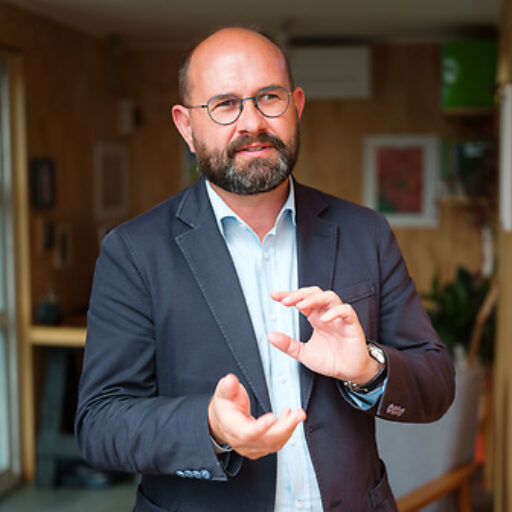
Article written by Nick Roud, Multi-Award Winner & Founder of Nick Roud Coaching
Somewhere along the line, many CEOs quietly inherit a second title: Chief Everything Officer.
They become the escalation pointer decisions that should ‘never’ reach them, the editor of every piece of communication, the unofficial head of culture, the fixer of underperformance, the final word on strategy and, increasingly the bottleneck!
It is rarely deliberate. It quietly creeps in through competence. When you are capable, responsive, and committed, more flows your way. Over time, the company subtly reorganises itself around you.
Peter Drucker warned us about this decades ago. Not in the language of overload, but in the language of time. For Drucker, the executive primary task was not decision-making or vision-setting. It was the effective use of your time.
“Time” he wrote, “is the scarcest resource, and unless it is managed nothing else can be managed. Period
The modern CEO often nods at this idea, then proceeds to spend their week in a pattern that tells a different story. Calendars filled with ‘internal’ meetings. Reactive problem solving. Decisions made at a level of detail far below where they add the greatest value. Long days, even longer nights playing catch up. Produce little that is truly strategic. Let me be very clear, the issue is not effort. It is allocation. Drucker pushed leaders to ask a deceptively simple question. What is the highest and best use of my time? Most CEOs don’t answer this explicitly. Instead, they default to availability. And with availability in a growing or complex company, is an infinite demand. The result I believe you can tell is predictable. The CEO becomes central to everything hence the Chief Everything Officer, and essential to nothing that is of highest value.
So the work begins in our coaching sessions to shift the mindset, shift the need to be over everything and dragged into everything. From “How do I get through everything that’s on my plate Nick” To ” What should only I be doing and what must stop, move or be ignored?”
That question to the majority of CEO I coach is uncomfortable often pushed to one side (but we pursue) because it forces trade-offs. It also exposes a deeper tension that I see. Many CEOs derive a sense of control, and even identity, from being involved. Letting go is not just operational. It is psychological.
My suggestions and invitation focuses on tracking time before attempting to manage time. When CEOs actually fully audit their calendars, the findings are often very confronting. How much time is spent on work that only you can do? How much is spent stepping into issues that should and must be owned elsewhere. Sure you need to be across things but lightly, very lightly. Where are you making decisions that disempower your direct leadership team rather than developing them? What proportion of your week is truly focused – looking, vs, consumed by the present?
These are not academic questions that are only taught at the Ivy League or residential (typically they are not) they are diagnostic. Just like visiting your GP evidence. Because every hour you spend on something misaligned is an hour taken away from what the company most needs from you. Consider that the next time you accept a meeting request!
Clarity, Direction and the creation of conditions for others to perform.
The Chief Everything Officer is, in my view a failure of system design. If everything comes to you, it suggests unclear decisions rights, underdeveloped leaders, or a culture that confuses responsiveness with effectiveness. Just to be clear to you your role is not to absorb this. It is to fix it. That might mean redefining who decides what and holding the line when people try to escalate unnecessarily. It might mean investing more time in developing your leadership team so they can carry greater weight within the company. It might mean tolerating short term discomfort as others step up, make mistakes and grow. And it almost certainly means redesigning your calendar with intent.
In observing and coaching successful CEOs over the last ten years, effective leaders do not start with tasks. They start with time blocks.
What would it look like if your week reflected your true priorities? I would argue a lot better for you and the company.
If strategic thinking, external engagement and leadership development were protected not squeezed in? If your calendar become a tool of leadership, rather that a record of requests? There is a hard truth here. If you do not take full control of your time, your company will do it for you. And it will not optimise for impact. It will optimise for convenience.
So my friend stop being the Chief Everything Officer. Start being deliberate about where you add the most value and disciplined about everything else. Because in the end, the effectiveness of your leadership is not measured by how much you do. It is measured by how wisely you choose not to.
Closing Questions for reflection.
- What percentage of my time last week was spent on work that only I can do?
- Where am I consistently stepping into decisions that should sit with my team?
- What am I holding onto that is limiting the growth of others?
- IF I had to cut 25% of my meetings, which would go and why are they there in the first place?
- What would my ideal week look like if I built it from scratch (very interesting to do)?
- Where am I confusing being busy with being effective?
- If Nick was to review my calendar what would he say?