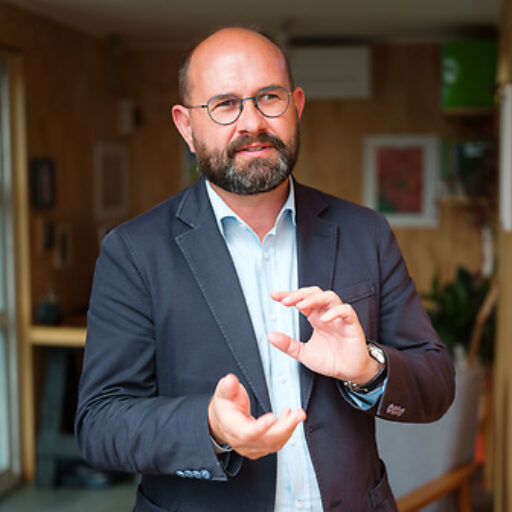
Written by Nick Roud, Leadership Development Coach, Paris, France, 17th March
Modern leaders choose 1:1 coaching because they have discovered a hard truth: insight without sustained practice changes very little. A university course or workshop, couple of days off site can inspire, but it rarely rewires habits at the pace and complexity of today’s organisations. We need to consider sustained practice. A sports team has a coach with them every day, sharing direction, thoughts, insights, they do not call that coach in once a year?
After the buzz: why workshops fade
Leadership courses and residentials do something valuable: they interrupt routine. For a few days, a leader steps away from email, PowerPoint, and quarterly pressure, and is invited to think. Case studies, frameworks, and group exercises create energy and a sense of possibility. Yet, when the leader returns to the office, reality reasserts itself: the inbox is full, the calendar is crowded, the team is waiting. The system into which the leader returns is perfectly designed to produce yesterday’s behaviour. Over the past 5 years in particular with my work into universities and various institutions I have seen first hand the positive impact made and with careful follow up how behaviours actually do change. If no follow up is done then the results are going to look very different. I have been working at a University in France recently and together with the cohort we were discussing ‘so now what’ they coined the phrase and it resinated with many of the leaders in the room, so now what!
Peter Drucker often reminded us that the purpose of management development is performance, not elegance of concept. Conceptual understanding is necessary but by itself it does not survive contact with the pressures of daily work. The residential is an event; leadership, however, is a process. What fails is not the theory but the transfer. Taking the effort from the classroom to the playing field has to be closely monitored and observed to ensure what has been discussed can be released.
Three structural problems explain why the “buzz” rarely becomes behaviour:
- The learning is generic while the work is specific. The case in the classroom is not the conflict with your head of sales or the board meeting on Thursday.
- There is little real accountability for behaviour change; attendance is measured, not practice.
- There is no protected time to reflect on action, test new approaches, and adjust. Experience remains unexamined, and therefore unconverted into insight.
In Drucker’s language, leaders return to working in the job rather than on their own leadership. They resume doing, without revising the underlying assumptions that drive their decisions and their interactions. It is easy to quickly fall back into your own routine and behaviours, I know again through conversations with my leaders that they need that space and follow up to ensure things get cemented. The driven high achievers are the ones to really seek out accountability in there leadership work.
Why modern leadership demands a different approach
The context for leadership has shifted. Complexity, speed, and interdependence have increased, while employee expectations around meaning, autonomy, and well‑being have risen. Traditional command‑and‑control has lost much of its effectiveness (all though with the behaviours of various leaders of countries this could be seen as a movement back to old ways), leaders are now asked to shape culture, steward human energy, and navigate ambiguity, not merely to allocate tasks. This is why having the right people around you makes a big advantage to companies.
Our one on one coaching work with executives and in particular with my CEO clients, emphasises that leadership has “moved on”; the role is no longer simply to direct but to create the conditions in which others can do their best work. That requires high self‑awareness, emotional regulation, and the ability to hold multiple perspectives in tension. These capabilities are not installed by lecture. They are cultivated over time in the crucible of real decisions, real life and real action.
Two things follow:
- The more complex the environment, the more dangerous unexamined habits become.
- The more the organisation depends on discretionary effort and creativity, the more the leader’s behaviour shapes performance.
In this environment, development must be both personalised and continuous. It must fit the leader’s unique context and adapt as their challenges evolve. This is precisely where 1:1 coaching has moved from “nice to have” to necessity.
Why modern leaders choose 1:1 coaching
From a Druckerian perspective, the first question is always: What is the contribution? Leaders invest time and money in 1:1 coaching because they experience a contribution they do not get from courses:
1. A bespoke focus on real work
One‑to‑one coaching is not curriculum‑led; it is context‑led. The agenda is the leader’s actual challenges: the upcoming restructure, the underperforming executive, the board relationship that has become strained. Rather than working on generic competencies, coach and leader work on live situations in real time.
This has two consequences. First, the leader sees immediate relevance; there is no translation gap between the classroom and the office. Second, each conversation becomes a laboratory in which the leader can examine assumptions, test options, and design concrete experiments to run between sessions. Putting conversations into action so the leader can have the confidence to perform, these are nutted out in our safe one to one coaching room.
In Drucker’s terms, this shifts development from abstract “education” to systematic self‑development in the service of performance. The leader learns on the job about the job—using their own decisions as case studies.
2. Depth of reflection and psychological safety
Most senior leaders are lonely. The higher they rise, the fewer truly honest conversations they have. Power distorts feedback; subordinates tell the leader what they think the leader wants to hear, and peers are often competitors for attention and resources. The result is a shortage of unvarnished data and a surplus of self‑protective narratives.
Effective 1:1 coaching offers what group programmes seldom can: a confidential, psychologically safe space to think aloud, admit doubt, and explore blind spots without reputational risk. In that space, the leader can confront questions that rarely make it onto an agenda:
- What behaviour of mine is quietly undermining my team’s trust?
- Where am I avoiding a conversation because it threatens my self‑image?
- What am I pretending not to know about my current role and fit?
Research and practice in coaching emphasise that this depth of reflection is a primary driver of lasting behaviour change. Drucker would recognise in this the disciplined practice of self‑assessment that he advocated for every knowledge worker.
3. Accountability for behaviour, not attendance
In a residential, accountability is to the schedule: you show up at 8:00, you complete the exercise, you fill in the feedback forms. Afterwards, life resumes, and old patterns reassert themselves. Little in the system pushes the leader to persist once the programme ends.
In a 1:1 coaching relationship here at Nick Roud Coaching, the accountability is personal and behavioural. Actions are expected. If not the engagement is stopped. Up front and along the way the leader articulates specific goals improve decision‑making under pressure, delegate more effectively, hold people to account without fear of conflict and commits to concrete actions between sessions. We work inn partnership towards your needs. I will challenge you see below for examples.
- “You said you would have a direct conversation with your COO before this session. What did you actually do?”
- “Last time, you noticed a pattern of rescuing your team. What happened this week?”
This cadence of commitment and review creates a rhythm of practice that most leaders struggle to sustain alone. In Drucker’s language, what gets measured gets managed; in coaching, what gets spoken and revisited tends to get done. This is a non negotiable in our engagement, say it, do it.
4. Development of self‑awareness and emotional intelligence
Modern leadership effectiveness rests heavily on emotional intelligence: understanding one’s own emotions, reading others accurately, and responding with composure and empathy. Yet these are precisely the capacities that are hardest to build in a group setting; they are lived, not lectured.
1:1 coaching heightens self‑awareness by holding up a mirror. Sometimes I bring it close and at times hold it far away. Through questions and feedback, I help the leader see how their behaviour lands with others, where their triggers lie, and how their internal stories drive external reactions.
Typical shifts include:
- From reactivity under pressure to deliberate response.
- From assuming intent (“they’re resisting me”) to inquiring into impact.
- From over‑identifying with role (“I must have all the answers”) to owning limits and inviting contribution.
These shifts are subtle but cumulative. Over time, in nearly every engagement over the past 10 years its been around month six, they change the emotional climate around the leader. Drucker described management as “human beings working together.” Coaching strengthens the leader’s capacity to make that human system more coherent and less wasteful of energy.
5. Strategic thinking time
Many experienced leaders do not lack knowledge; they lack thinking time. Their calendars are filled with meetings in which they are expected to decide rapidly, often with insufficient reflection. They become skilled firefighters, but poor designers of the fire‑prevention system. In a CEO Coaching session just this week the CE shared, Nick I have finally got time into my diary no meetings, nothing just time to actually think. It is really helping my focus and results. This is just brilliant
Coaching carves out protected time for strategic reflection. For an hour, the leader steps onto the balcony, away from the dance floor. they examine patterns across issues: Where are we repeatedly stuck? What is the systemic cause behind these recurring symptoms? Where should I stop doing, not just do more?
This systematic reflection aligns closely with Drucker’s insistence that the executive’s scarcest resource is time, and that the first task is to allocate it to the most important contributions. Coaching enforces that discipline.
6. Adaptability and ongoing relevance
Traditional programmes are static: designed once, delivered many times. 1:1 coaching is inherently adaptive, I like to call it bespoke with foundations! As the leader’s role evolves new team, new strategy, merger, crisis the focus of coaching shifts with it. The development process stays aligned with current reality rather than with last year’s curriculum.
Modern organisations are fluid; roles and expectations change quickly. A leader might start coaching to navigate a promotion and, six months later, need to lead a restructuring or a digital transformation. A good coaching process can pivot, integrating new demands and revising goals.
From a management standpoint, this adaptability makes coaching an efficient investment: it stays relevant over time, rather than expiring when the programme ends.
The concrete benefits: what actually changes
It is not enough to say that coaching “feels” helpful. Drucker would ask: What results does it produce? Evidence from practice and research consistently points to several recurring benefits.
Better decisions under pressure
Leaders who engage in 1:1 coaching report clearer thinking and more confident decision‑making, especially in complex or high‑stakes situations. This improvement stems from:
- Greater self‑awareness of biases and default reactions.
- A structured space to think through options and consequences before acting.
- Practice distinguishing between urgent noise and genuinely important issues.
By exploring real decisions in coaching sessions, leaders build a repertoire of mental models and a habit of pausing before reacting. This is not an intellectual exercise; it is a trained response.
Stronger relationships and communication
Coached leaders often see marked improvement in relationships with their teams, peers, and stakeholders. Coaching helps them:
- Hold difficult conversations earlier and more constructively.
- Listen for understanding rather than for rebuttal.
- Tailor their communication to the needs of different individuals.
One‑to‑one coaching also models the very behaviours leaders want to bring into their own 1:1s with team members: attentive listening, thoughtful questioning, and a focus on development rather than mere appraisal. Over time, this can reshape the culture of dialogue in the leader’s area of responsibility.
Increased engagement, confidence, and resilience
For both emerging and experienced leaders, coaching often increases confidence and reduces the sense of isolation. Emerging leaders move from “Am I doing this right?” to “I know how I lead.” Senior leaders find more sustainable ways to manage pressure and maintain presence without burning out.
Benefits commonly reported include:
- A clearer sense of personal leadership style and values.
- Stronger boundaries around time and energy.
- Greater resilience in the face of setbacks.
From an organisational standpoint, these outcomes matter because confident, resilient leaders are better able to engage their teams and sustain performance over time.
Accelerated skill development
Where programmes offer broad exposure, coaching offers targeted development. Leaders use their sessions to work intensively on specific skills: giving feedback, delegating, influencing across the matrix, managing conflict.
Because the work is anchored in live situations, the feedback cycle is short: the leader tries a new behaviour between sessions, then returns to analyse what worked and what did not. This tight loop accelerates learning far more than occasional workshops.
Improved organisational outcomes
At the organisational level, executive coaching has been linked with gains in leadership effectiveness, team performance, and change implementation. While causality is complex, several mechanisms are clear:
- Leaders make better use of talent by delegating more effectively and aligning people with their strengths.
- Communication improves, reducing friction and misunderstandings.
- Change efforts are led with greater clarity and empathy, increasing adoption.
Drucker might observe that coaching improves the “yield” on leadership time: for each hour a leader invests, the organisation receives more focused, thoughtful, and constructive action.
Why 1:1 coaching creates lasting change
The question remains: why does 1:1 coaching succeed where courses often fade? The answer lies in how humans actually change.
Learning is not merely the acquisition of information; it is the reshaping of habits. Habits change through repeated action in real contexts, with feedback and reflection. 1:1 coaching is designed around this principle.
Several features support lasting change:
- Personal relevance: The work is always about the leader’s own situations, which keeps motivation high.
- Repetition and practice: Sessions are spaced over months; between them, the leader experiments and returns to reflect.
- Feedback and adjustment: The coach provides challenge and perspective, helping the leader refine their approach.
- Integration with identity: Over time, leaders do not just “use techniques”; they come to see themselves differently as the kind of person who has direct conversations, who delegates, who listens.
Nick Roud’s emphasis on leadership as an ongoing journey rather than a destination fits well here: coaching honours the fact that leaders are always in formation, never finished. Drucker would recognise in this an applied form of “managing oneself” over the arc of a career.
From event to discipline
The modern leader who has “done the course” and “been on the residential” is often left with a quiet frustration: “I know more than I do.” They have slides and notes, but their daily behaviour has not shifted in the ways that matter most. The gap between intention and action remains.
1:1 coaching is the bridge many leaders now choose to build. It turns development from an event into a discipline, from a burst of inspiration into a sustained practice of examining, choosing, and acting differently in the real world.
Drucker taught that the ultimate test of management is results. Roud’s work reminds us that the vehicle for those results is the leader’s day‑to‑day behaviour. One‑to‑one coaching sits precisely at that intersection: where insight is converted into habit, and where the leader’s growth becomes the organisation’s advantage.
Bonjour from France, Nick x