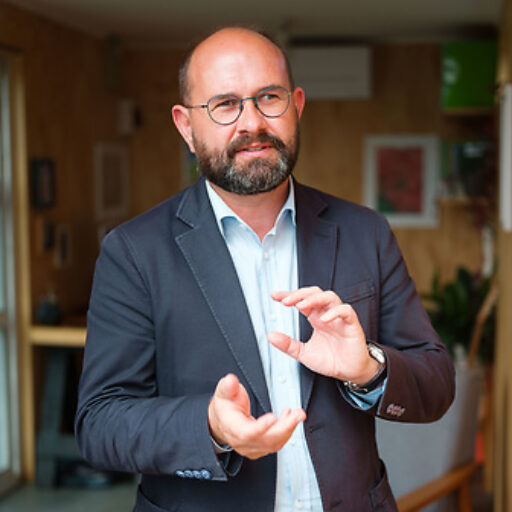
Article written by Nick Roud, Auckland New Zealand, 17th November 2026
There is a moment many of us know well. You are halfway through a meeting, halfway through a week, halfway through a season of life, when someone asks, “How are you going?”. If I had a dollar for every time someone has said or I have said “How are you going?” I would be living next door to Richard Branson.
And before you have time to think, you answer: “Busy.”
Busy has become one of the most common answers in modern working life. It is also one of the least useful. Being busy tells us very little about whether we are growing, contributing, connected, or moving toward the work that matters to us. Busy is a cop-out. My challenge to you is for two weeks if you say the word busy’, then pay $20 to your favourite charity.
A career is not simply a series of roles, titles, promotions or pay rises. At its best, it is a long conversation between who you are, what you care about, and the difference you are able to make in the world. It is shaped by the people you meet, the problems you solve, the risks you take, and the moments when you choose to keep learning rather than simply keep up.
Celebrating your career does not mean waiting for a milestone, a retirement party, or a LinkedIn anniversary notification. It means noticing the work you do now, the impact it creates, and the person you are becoming through it.
The other night I had a dream, it was me back in London working in a Chartered Accountancy firm, I woke in a sweat not because something had happened but because here I am about to turn 52 and that was decades ago, in a blink of an eye things past us by like a bus that won’t stop. Frustrating yet funny when you think about it.
The question beneath the question
When people come to the global headquarters aka 20ft shipping container here in Auckland, they often arrive with a practical question.
“I want a new role.”
“I want a promotion.”
“I want more balance.”
“I want to lead better.”
“I want to know what comes next.”
These are important questions. But beneath them is usually a deeper one: Am I living and working in a way that feels true to me? Am I really living my values?
That question matters because work occupies a significant part of our lives. It influences our confidence, our relationships, our energy, our sense of contribution, and often our identity. When work is aligned with our values and strengths, it can be energising. When it is not, even a successful career can feel strangely hollow. I said to a mate the other day whilst visiting one of the islands that surround us here in Auckland “I don’t work anymore, I really love and enjoy what I do” He looked at me and after a few explicit words which only a true mate can say to your face he said “I think I am wasting my life away with the work I do”. We carried on talking.
The danger is that we can become so busy being busy that we stop asking the deeper questions.
We measure our weeks by meetings attended, emails answered, deadlines met and problems extinguished. We become experts at reacting. We become less practised at reflecting. Have you ever spent time watching a dog? Well we have Maggie our soon to be 2 year old border collie, she often sits here with me and in our quiet little part of paradise she finds herself sleeping under the desk for hours on end. I am sure she is meditating but then a car comes down the long drive and she is ready for action. We must learn to really slow down and be where our feet are.
But reflection is not a luxury. It is how we learn. It is how we notice patterns. It is how we understand what gives us energy, what drains us, and where our contribution has the greatest meaning.
Learning does not stop just because you are busy. In fact, busy periods are often when the most important learning is available if we create even a small space to notice it.
Why do you do the work you do?
It is a simple question, but not always an easy one.
Why do you do the work you do?
Some people answer with practical reasons: income, security, opportunity, routine. These matter. Work provides for families, creates choices, and gives structure to life. There is no need to romanticise work or pretend that every day feels meaningful. But beyond the practical, there is usually something else. Perhaps you enjoy solving difficult problems. Perhaps you like helping people feel understood. Perhaps you are motivated by building something that lasts. Perhaps you care deeply about fairness, quality, safety, innovation, community, or creating opportunity for others. Perhaps you do not yet have language for it. You simply know that certain moments in your work feel more alive than others.
Those moments matter.
They are clues.
A leader may discover that their greatest satisfaction comes not from presenting to the board, but from seeing a team member grow in confidence. A teacher may find meaning in the quiet moment when a student finally believes in their own ability. A health professional may be energised not only by clinical expertise, but by the human connection that allows a patient to feel safe. A business owner may be driven less by revenue than by the opportunity to create jobs, build trust, and contribute to a local community.
Your “why” does not have to be grand. It does not need to fit on a poster or sound impressive at a dinner party. It simply needs to be honest. Only you know if you are being honest with yourself.
When you understand why you do your work, you begin to make different choices. You become more intentional about the projects you take on, the people you spend time with, and the skills you choose to develop. Purpose is not something you find once and keep forever. It is something you continue to notice, test and refine as your life and career evolve. Sure some may never find purpose, always striving for the next big thing, and that is totally fine. You do you.
The impact you make
Many people underestimate the impact they have. We tend to think impact means something visible: a major project delivered, a target achieved, a business grown, a policy changed, a product launched. These are important. But impact is often quieter than that. Impact can be the way you make someone feel heard in a difficult conversation. It can be the standard you set when nobody is watching. It can be the encouragement you give a colleague who is doubting themselves. It can be the calm you bring to a pressured team.
It can be the question you ask that helps someone see a problem differently. It can be the trust you build over years, so that people know they can rely on you. In every workplace, there are people who create impact not because they seek attention, but because they consistently show up with care, competence and integrity. Their influence is often invisible in the moment, but deeply felt over time.
Consider the leader who remembers to ask about a team member’s family during a stressful period. Consider the colleague who takes the time to explain something properly rather than simply telling someone what to do. Consider the person who speaks up respectfully when a decision does not align with the organisation’s values. These are not small things.
Human connection is not separate from performance. It is part of performance. Teams perform better when people feel safe, respected and seen. Customers remember how they were treated long after they forget the specifics of a transaction. Organisations become stronger when people feel their contribution matters. Of course, impact also requires skill. Care without capability can become well-intentioned but ineffective. Capability without care can become cold and transactional. The most meaningful impact often comes from bringing both together: doing good work, and doing it in a way that strengthens the people around you.
Human connection still matters
In an increasingly digital world, just look at what has been going on with this space over the past decade!, it is easy to believe that efficiency is everything. We can communicate instantly, work across time zones, automate processes and access information at extraordinary speed. It still blows my mind that I can be coaching a CEO in Canada and whilst not together we can make it very impactful. That is thanks to technology. Gosh we have saved some air miles. But I still love the human connection that will never leave me.
Yet the more technology enters our working lives, the more valuable genuine human connection becomes. Someone shared we plug and charge our phones more than we re-charege ourselves. Interesting when you think about that don;t you think?
People do not simply want to be managed. They want to be understood. And that won’t come from a bit of fancy kit, that comes from people. They want to know that their manager notices when they are carrying too much. They want colleagues who will listen without immediately trying to fix everything. They want leaders who can hold a difficult conversation with honesty and respect. They want to feel that they are more than a name on a spreadsheet, a resource in a plan, or a line in a budget.
This is not soft. It is fundamental.
Trust is built through small, repeated actions: following through on commitments, listening well, being honest, admitting mistakes, recognising effort, and treating people consistently. Without trust, even the most talented teams struggle. With trust, people are more willing to challenge ideas, admit uncertainty, learn from failure, and go beyond what is expected. Connection also changes how we learn. We learn from mentors who take time to share what they know. We learn from peers who challenge our thinking. We learn from customers who tell us the truth. We learn from people whose experiences differ from our own.
No one develops in isolation.
The best careers are rarely built alone. They are built through relationships the manager who gave you a chance, the colleague who told you a hard truth, the mentor who saw potential before you did, the team that helped you through a difficult period, and the person who believed in you when you were not yet sure you believed in yourself. Have you thanked a previous or current mentor recently? Write them a letter, post it. Do it today, you will not regret doing it that email can wait.
Learning does not stop because you are busy
One of the biggest myths in professional life is that development requires a large block of time. It does not. Learning does not always look like a course, a qualification, a conference, or a formal development plan. Those things can be valuable. But real growth often happens in much smaller moments.
It happens when you ask for feedback after a presentation. It happens when you notice that a conversation did not go as well as you hoped, and you ask yourself what you could do differently next time. It happens when you read something that challenges your assumptions. It happens when you observe how an experienced colleague handles a difficult situation. It happens when you ask a question rather than pretending you already know the answer. It happens when you pause after a meeting and reflect What did I learn? What surprised me? What would I do differently?
Busy people often say they do not have time to develop. There’s a healthy clue right there, I am too busy. No you are not. But development does not need to compete with a busy life. It can be woven into it. A five-minute reflection at the end of the day can be powerful. A regular conversation with a mentor or coach can change the direction of a career.
A willingness to ask, “What would you do in my position?” can open doors that no job advertisement ever will. A commitment to listening more carefully can improve relationships, decisions and results.
The question is not whether you have time to learn. The question is whether you are paying attention to what life is already teaching you.
The trap of being busy
Busy is not the same as productive.
Busy is not the same as effective.
Busy is not the same as fulfilled.
We can be extremely busy and still feel stuck. We can be constantly active and still avoid the conversations, decisions or changes that would truly move us forward. Sometimes busyness becomes a place to hide. This was evident when coaching a CEO in Perth last month when my client was hiding and she knew it. I asked her – what are you hiding from? We unlocked so much in such a short period of time. I was very proud of her and today she is not hiding and guess what, she is not busy either.
It is easier to answer another email than to have an honest conversation about career direction. It is easier to attend another meeting than to reflect on whether we are in the right role. It is easier to keep doing what we have always done than to face the possibility that we want something different. This is not a criticism. It is human. Change can be uncomfortable. Uncertainty can be unsettling. It is often easier to stay busy than to stop long enough to listen to ourselves.
But if we never pause, we risk living on autopilot. And then you are in your 60s thinking what the hell was that all about!
We risk reaching a point where we look back and realise we have been moving quickly, but not necessarily in a direction that matters to us.
Celebrating your career means creating moments to check in. Not once a year, when performance review season arrives. Not only when something has gone wrong. Regularly.
Ask yourself:
- What am I learning right now?
- What work gives me energy?
- Where am I making a difference?
- Which relationships help me grow?
- What strengths am I using?
- What feels out of alignment?
- What would I like to be true about my work in 12 months’ time?
- What is one small step I could take this week?
You do not need to solve your entire career in one sitting. You only need to become a little more intentional.
Progress is rarely linear
Careers are rarely neat. They include unexpected turns, setbacks, detours, redundancies, restructures, family responsibilities, health challenges, and moments when the path forward is unclear. A career may include roles that did not work out. It may include periods of uncertainty. It may include decisions that, at the time, felt risky or inconvenient, but later proved important.
This is not failure. It is experience.
Some of the most valuable learning comes from difficulty. A challenging manager may teach you what kind of leader you do not want to become. A failed project may teach you resilience, judgement and humility. A period out of work may give you space to reconsider what you truly value. A change in circumstance may reveal strengths you did not know you had.
The goal is not to have a perfect career. The goal is to keep learning from the career you actually have.
Progress is not always upward. Sometimes it is inward. Sometimes it is about becoming clearer, calmer, braver, or more generous in how you work with others.
Celebrate the person you are becoming
When we celebrate a career, we often celebrate achievements: qualifications gained, roles secured, businesses built, teams led, awards received, milestones reached. These deserve recognition. But perhaps the deeper celebration is the person you are becoming through your work. The person who has learned to speak up. The person who has learned to listen.
The person who has learned to lead without needing to control everything. The person who has learned to recover after a setback. The person who has learned that confidence is not the absence of doubt, but the willingness to act despite it.
The person who has learned that success is not only about what you achieve, but about how you treat people along the way.
Your career is not just something you do. It is something you participate in, shape, and grow through.
Every conversation, every decision, every difficult day, every moment of curiosity contributes to that development.
A practical invitation
If this resonates, do not wait for a perfect moment to begin reflecting.
Take 10 minutes this week.
Find a quiet space. Put your phone away. Write down answers to three questions:
- What am I proud of in my work at the moment?
- What impact am I having on the people around me?
- What is one thing I want to learn or do differently before the year ends?
Then choose one small action. Perhaps it is booking a conversation with someone whose career you admire. Perhaps it is asking a colleague for honest feedback. Perhaps it is setting aside 20 minutes each week to reflect. If reflect is too wishy-washy then call it something else, but my friend let me say this when you commit, when you are consistent things start to happen.
Perhaps it is having a conversation with your manager about the kind of work that would allow you to contribute more fully.
Perhaps it is simply noticing, for one week, what gives you energy and what takes it away. I have my clients do an exercise no matter if you are an emerging leader or the PM, get a big sheet of paper, divide it in half, on the left draw a smiley face, on the right draw a sad face. Then get to work. What lights you up what brings you down. This is a great starting place if you are reading this and going great…….but how do I start.
Small actions, repeated over time, create change.
Your career is worth noticing
You do not need to wait for someone else to celebrate your career. You can begin now. Notice the skills you have developed. Notice the challenges you have navigated. Notice the people you have supported. Notice the standards you uphold. Notice the difference you make, even when it is not immediately visible.
Notice that you are still learning.
Because you are. You have read this far so congrats you are learning 🙂
No matter how experienced you are, no matter how senior your role, no matter how busy your calendar, there is always more to learn about your craft, about leadership, about people, and about yourself. The most meaningful careers are not built by chasing every opportunity or trying to appear endlessly capable. They are built by people who remain curious, connected and willing to grow.
So the next time someone asks how you are, perhaps pause before answering, “Busy.”
Ask instead: “What am I learning? Who am I becoming? What difference am I making?”
Your career deserves that kind of attention.
And so do you.
With love, Nick x