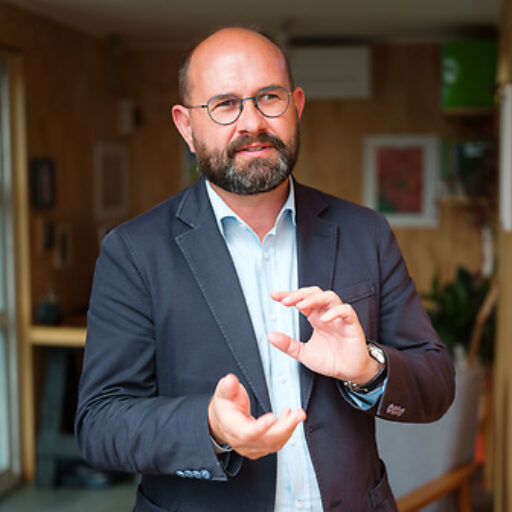
Article written for leaders of today and those of the future, by Nick Roud. July 2026, Auckland, New Zealand.
In every era, leadership has been a response to the world people were living in. In the 1800s, that world was slower in some ways and harsher in others power was concentrated, hierarchy was largely unquestioned, and leadership was often understood as command, control and certainty. Today, leadership is being reshaped, could it be intentional, led by a small group or is society simply bowing down to the way ‘it should be’. We are seeing complexity, technology, trust, and the simple reality that no one person can hold all the answers.
That shift matters because leadership is not just something executives do in boardrooms. It is how parents, teachers, managers, coaches, community leaders, and team members create direction, safety and momentum in the lives around them. The future of leadership, then, is not a distant concept reserved for a few. It is already being lived in the everyday in the choices we make about how we listen, decide, adapt and include others.
What leadership looked like in the 1800s
If we look back to the 1800s, leadership was often shaped by visible rank, inherited status, military structures, empire, and a belief that authority flowed from the top. The century also saw early leadership thinking framed through “Great Man” ideas and trait-based thinking, which assumed that leaders were exceptional individuals born with special qualities rather than people shaped by context and relationship. That style of leadership could create clarity and speed, but it often came at the cost of voice, participation and flexibility.
And yet, even then, some leaders were already showing a broader kind of influence. Social reformers, suffragists and community leaders were proving that leadership was not only about position but about purpose, courage and persistence. In that sense, the 1800s remind us that leadership has always had two faces: one that seeks control, and one that seeks change.
How we lead now
Fast forward to today, and leadership looks far less like one person at the front and far more like a network of people making sense of change together. In New Zealand, leadership thinking increasingly emphasises high-trust relationships, collective leadership, cultural responsiveness, wellbeing, moral purpose and strategic adaptability. That is not soft thinking; it is practical leadership for a world where the pace of change leaves little room for rigid answers. Research and leadership commentary in Aotearoa also point to a move away from the old model of the CEO as the sole source of direction. Leadership is now seen as something that can travel up, across and down an organisation, activating at the frontline and operating horizontally as well as vertically. In plain terms, the best leaders today are less like conductors controlling every note and more like gardeners creating the conditions for others to grow. I still come to the observation that if you are good in the garden, you can grow delicate flowers, plants, vegetables then you may well be a very effective leader.
AI, hybrid work and changing expectations are sharpening this further. Recent reports suggest organisations need strategic thinking, digital fluency, leadership skills, adaptability and resilience, while also recognising that institutional knowledge, mentoring and human connection matter more, not less, in an AI-enabled workplace. The message is clear: the future does not belong to the person with the loudest voice, but to the leader who can connect people, context and capability. To all my fellow Introverts in the world may I invite you to step forward with courage and let’s see how we will change the world for the better.
What 2080 may ask of us
It’s an ongoing debate I have with myself here at Nick Roud Coaching. So; what might leadership look like in 2080? No one can know for certain, and that is exactly the point. If history teaches us anything, it is that leadership evolves when the world changes its questions. By 2080, leaders may be guiding organisations through deeper climate adaptation, more advanced AI, shifting demographics, new work patterns and expectations we have not yet imagined. Over the past decade I have been confidnetially coaching an American whose work will see a hotel on Mars, not in our lifetime, nor our childrens childrens lives but it will happen.
In that world, the most valued leaders may be those who can hold paradox without panic. They will need to be technologically fluent and deeply human, data-aware and ethically grounded, globally minded and locally rooted. They will need to lead with enough confidence to move people forward, and enough humility to admit they are still learning. That combination is likely to matter more than charisma alone.
We may also see leadership become even more distributed. As systems grow more complex, leadership may not sit in a single role or title at all, but move fluidly between people depending on the challenge at hand. The leader of 2080 may be the person who can convene a room, create trust quickly, read the room well, and help others act with courage before all the data is complete.
The human thread
Across all three eras, one truth remains: leadership is relational. In the 1800s, it was often defined by power. Today, it is increasingly defined by trust. In 2080, it may be defined by our ability to bring humanity into systems that are becoming more automated, faster and more complex. We must remember not all of humanity will code, we must look at pathways that create our future leaders in order for them to evolve the world forwards.
That is why the most enduring leadership question is not, “How do I look in charge?” It is, “What happens in the people around me because I am here?” That question is both confronting and freeing. It moves leadership away from performance and towards impact, away from ego and towards service, away from certainty and towards curiosity. I am sure you can think of a leader past or present that froze the room with his/her approach and flip that coin over the leader who saw something in you that sparked a shift positive shift forwards!
This is where readers may find the article most useful in their own lives. Whether you lead a business, a team, a family or just your own next step, the real invitation is to notice the style you are practising now. Are you leading like the 1800s, with control and hierarchy? Are you leading like today, with collaboration and adaptability? Or are you already rehearsing the kind of leadership the future will need: brave, inclusive, thoughtful and alive to change?
A more hopeful future
The good news is that leadership is learned. It is not fixed at birth, and it is not reserved for the naturally confident. It is built through reflection, feedback, experience and the willingness to stretch. That means the future of leadership is not something to wait for. It is something we can shape in our meetings, our conversations, our decisions and our relationships from right now.
If we want a better future, we may need to become slightly better leaders before it arrives. Not perfect. Not polished. Just more curious, more accountable and more open to the intelligence of others. That is how leadership becomes future-fit: not by predicting everything, but by creating the conditions to respond well when the unexpected comes.
And perhaps that is the real gift of looking back to the 1800s and forward to 2080. It reminds us that leadership has never been static. It has always been a living practice, shaped by the needs of the times. The question for each of us is simple: what kind of leader will the people around us need next?
Welcome to the creation of our futures. Thanks for reading
Nick