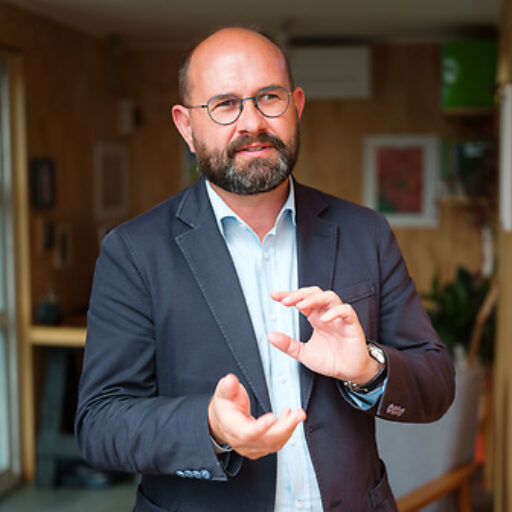
written by Award Winning Leadership Coach, Nick Roud. Auckland, 20th July 2026.
In an era where leadership development has become an industry of scale programs, cohorts, certifications, and immersive retreats one truth remains quietly constant: leaders do not fundamentally change in groups. They change in relationship.
While residential and university-based programs offer valuable frameworks and shared learning (theory), they often struggle to deliver what matters most lasting behavioural change. Insight alone is insufficient. Awareness without application fades quickly under the pressure of real-world demands. The gap between knowing and doing remains the most persistent challenge in leadership development. Can you recall a time when you doubled down on a key aspect of your leadership. Worked relentlessly on it? What did you notice, What results emerged over a longer period of time? Then recall a time you were pumped, on a high could be post a short workshop. What did you notice after a few months gap with no follow up? What results emerged?
It is in this gap that one-to-one coaching proves its distinct value.
Beyond Insight. The Work of Change
Leadership is not a theoretical discipline. It is lived, tested, and refined in moments of pressure, ambiguity, and consequence. The most critical leadership shifts how a CEO makes decisions under uncertainty, how a senior leader navigates conflict, how an emerging executive finds their voice do not occur in controlled environments. They happen in real time.
One-to-one coaching is uniquely positioned to meet leaders where they actually lead.
Unlike structured programs, coaching is not bound by curriculum or cohort pace. It is anchored in the leader’s context, their unique and individual challenges, and sitting on top of that their aspirations. This allows for a level of precision that broader programs cannot replicate. Conversations are not hypothetical; they are grounded in immediate realities. The work is not abstract; it is applied, tested, and refined continuously.
This is where behavioural change begins to take hold.
The Power of Partnership
At its core, effective coaching is not advisory it is relational. The strength of the outcome is directly tied to the quality of the partnership. A good fit goes a long way, a great partnership changes the world! Trust is not a byproduct; it is the foundation. Without it, leaders perform. With it, they reveal. And it is only in that space of honesty that meaningful change becomes possible.
A skilled coaching partner does more than listen or guide. They challenge thinking, surface blind spots, and hold a level of accountability that is both rigorous and supportive. Importantly, they are independent free from internal politics, organisational bias, or performance agendas. This creates a rare space where leaders can think clearly, speak openly, and explore without consequence. This is how I coach in every single one-to-one engagement. Trust first, awareness second, accountability thirdly.
Over time, this partnership becomes a catalyst. Leaders begin to see patterns in their behaviour, understand the impact of their decisions, and experiment with new approaches. The work is iterative, deliberate, and sustained.
What Progress Looks Like at the Executive Level
For senior leaders, the value of one-to-one coaching is not theoretical it is measurable in how they lead, decide, and deliver. This is not measured by them or be me but by the stakeholders they lead each and every day.
Executives who engage deeply in coaching consistently demonstrate:
- Sharper decision making under pressure, with greater clarity and reduced second guessing.
- Increased strategic focus, shifting time and energy away from operational noise toward enterprise level priorities.
- More effective stakeholder management, including improved board alignment and executive team cohesion.
- A measurable lift in team performance, driven by clearer expectations, stronger accountability, and more consistent leadership behaviours.
- Greater confidence in navigating ambiguity, particularly during periods of transformation, restructuring, or growth.
- Reduced leadership friction fewer escalations, more constructive conflict, and faster resolution of critical issues.
- A stronger leadership presence, reflected in how they communicate, influence, and set direction.
In many cases, these shifts translate directly into business outcomes faster execution of strategy, improved retention of key talent, and stronger organisational alignment. I come back to the fact that in a one-to-one engagement the focus is on the situation, the real life situation. But perhaps most importantly, leaders report a regained sense of control and intentionality in how they lead moving from reactive to deliberate.
From Awareness to Identity
The ultimate aim of leadership development is not skill acquisition it is identity shift. Temporary behaviour change is relatively easy to achieve. Tick a few boxes, nod the head at the right time and bingo you are a leader! Lasting change requires something deeper a redefinition of how a leader sees themselves and how they choose to show up. You can’t hide in a one-to-one coaching engagement you can in a classroom!
One-to-one coaching supports this transition by maintaining continuity over time. Rather than a single intervention, it becomes an ongoing process of reflection, action, and refinement. Leaders are not left to translate theory into practice alone; they are supported as they embed new behaviours into their daily leadership. We see lasting results emerge at around 7 months of one to one coaching.
Let’s share a recent coaching engagement situation. Consider a senior executive known for decisiveness but struggling with team engagement. A program may help them understand the importance of inclusive leadership. Coaching, however, works through the specifics how they run meetings, how they respond under pressure, how they invite input without losing authority. Over time, these adjustments compound. What begins as conscious effort becomes natural behaviour.
This is where change becomes durable. It’s where self and others see progress.
Leadership in Context
No two leadership journeys are identical. Industry pressures, organisational culture, personal ambition, and individual temperament all shape how leadership is expressed. One-to-one coaching respects this complexity. It does not impose a model; it adapts to the leader. This ensures that development is not only relevant but sustainable. Leaders are not asked to become someone else they are supported to become more effective versions of themselves. This is not seen as a luxury this is seen as an investment in your professional development.
This is particularly critical at the executive level, where the margin for error is small and the stakes are high. Generic development approaches often fall short because they cannot account for the nuance required. Coaching, by contrast, operates within that nuance. It puts designated time into the leader.
A Different Standard for Leadership Development
As organisations continue to invest in leadership capability, there is a growing recognition that scale does not equal impact. The question is shifting from “How many leaders have we developed?” to “How deeply have our leaders changed?” Show the ROI (return on investment). If you are not measuring and by measuring we mean effectively improving then buyer beware. One-to-one coaching sets a different standard one defined not by participation, but by transformation. Just to be clear, one-to-one coaching with Nick Roud Coaching is not the fastest route, nor the most visible. But it is often the most effective. We do not believe in short hacks or bridging gaps that crack under pressure.
A Call to Partnership
For leaders willing to do the work, coaching offers something few other approaches can, a dedicated space to think, challenge, and grow consistently, confidentially, and with purpose. Measurable improvement. The question is not whether leadership can be developed. It is whether it can be developed in a way that endures. In a recent re-group with a senior executive we discussed her coaching engagement which took place in 2018. She remarked on her learnings, the attention to detail that was exposed, the behavioural shift that others had commented on. She has recently stepped into the CEO of that major company.
If you are navigating complexity, stepping into a broader mandate, or seeking to elevate your impact as a leader, the right partnership can make the difference between incremental improvement and meaningful change.
The work begins with a conversation.
Nick