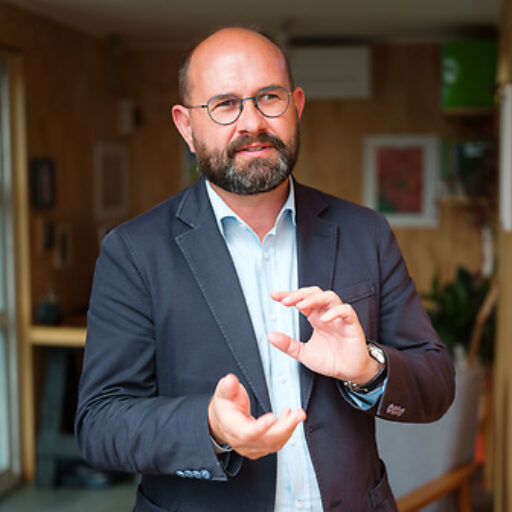
Article written by Nick Roud Coaching. Auckland July 6th 2026.
Leadership is often spoken of as though it were a position, a title, or a prize earned after years of striving. But leadership in my view and in its truest form, is none of these things. It is not bestowed by an organisation, nor granted by popularity, nor secured through authority alone. Leadership is a responsibility sometimes heavy, often inconvenient, and always revealing. It is the quiet decision to place the needs of others alongside, and often before, one’s own. Take a minute to ground yourself, I am not just writing today about leadership in the work sense, this flows to families, communities, church, sports teams etc.
In my life, I have come to understand that leadership is not about standing above people, but standing with them, toe to toe, shoulder to shoulder. It is not about being the loudest voice in the room, but about listening deeply enough that even the quietest voice feels heard. True leadership does not seek to dominate; it seeks to unite. And in a divided world, unity is not achieved through force, but through patience, understanding, and an unwavering commitment to justice. Just take a look around you today and notice what leaders are actually doing. How are they leading in your eyes, how would you lead if in his/her shoes?
At its heart, leadership begins with self-mastery. Before one can guide others, one must first learn to guide oneself. This is no small task. It requires honesty the kind that does not hide behind excuses or shift blame onto others. It demands discipline the ability to act with purpose even when the path is unclear or the outcome uncertain. And above all, it requires humility the recognition that one does not possess all the answers, and that wisdom is often found in unexpected places. If you come with a learners mindset you will go far. If you come with all the answers you may be in the wrong room!.
There is a temptation, particularly in positions of power, to believe that leadership means certainty. Here in New Zealand we are seeing a monumental shift of CEOs. Boards taking new directions which in some places means new leadership.
Leadership isn’t about knowing the right course of action, projecting unwavering confidence, avoiding doubt at all costs. To me this is a very dangerous illusion. The greatest leaders are not those who never question themselves, but those who question deeply and act nonetheless. They understand that doubt is not weakness; it is a sign that one is taking responsibility seriously. How you control that self-doubt is very important.
Leadership is also inseparable from empathy. To lead without understanding the lived experience of others is to lead blindly. Empathy is not softness; it is strength. It allows a leader to see beyond statistics and strategies, to recognize the human realities that exist beneath every decision. When a leader listens with empathy, they build trust. And trust, once established, becomes the foundation upon which all meaningful progress is built.
Yet empathy alone is not enough. Leadership also requires courage, the courage to make difficult decisions, to stand firm in the face of opposition, and to uphold principles even when doing so comes at great personal cost. There will be moments when compromise is necessary, and moments when it is not. The wisdom lies in knowing the difference. One area I see leaders avoiding is when values are not aligned to the place they work in. We should all be very mindful on ensuring our values are closely aligned.
A leader who seeks only to be liked will ultimately fail. There will be times when leadership demands saying no, when it requires challenging comfortable assumptions, and when it calls for holding others and oneself to a higher standard. Firmness, when grounded in fairness and integrity, is not cruelty. It is clarity. It provides direction when uncertainty threatens to paralyze progress.
In the struggle for justice and equality, I learned that leadership is often forged in adversity. It is easy to lead when circumstances are favorable, when support is abundant, and when the path forward is clear. But true leadership reveals itself in moments of hardship when hope is scarce, when the stakes are high, and when the cost of action is great. I recall a CEO I coached a number of years ago saying, they love you when you are there and quickly forget you when you have left! Interesting point don’t you think?
During such times, a leader must become a source of resilience. Not by denying the difficulty of the situation, but by acknowledging it fully and choosing to move forward regardless. People do not look to leaders for perfection; they look for steadiness. They look for someone who can hold both the weight of reality and the possibility of a better future at the same time.
Leadership is also an act of service. This is perhaps its most misunderstood aspect. To serve does not mean to be subservient. It means to recognize that the role of a leader is not to elevate oneself, but to elevate others. It is to create conditions in which people can thrive, to remove obstacles that hinder their progress, and to open doors that might otherwise remain closed.
Service requires sacrifice. There are moments when personal ambition must yield to collective need, when recognition must be shared, and when credit must be given freely. A leader who clings too tightly to status or reward will find that their influence diminishes over time. But a leader who gives generously of time, of attention, of opportunity will find that their impact extends far beyond their immediate reach.
Another essential element of leadership is the ability to forgive. This is not a simple or easy task. Forgiveness does not mean forgetting wrongdoing, nor does it mean abandoning accountability. Rather, it is the conscious decision to release the hold that resentment has over us, so that we may move forward with clarity and purpose.
In environments of conflict whether in nations, organisations, or communities leaders are often confronted with deep divisions. These divisions can be fueled by history, by fear, or by misunderstanding. To lead in such circumstances requires a commitment to reconciliation. It requires the willingness to engage with those who may oppose us, to seek common ground where none seems to exist, and to build bridges where walls have long stood. We only need to look at countries who are at war today to ask ourselves, how can we honour the past, respect views and come together for all.
This does not mean abandoning one’s principles. On the contrary, it requires holding them even more firmly, while recognising that lasting change is rarely achieved through exclusion. Inclusion, though more difficult, offers the possibility of transformation.
Leadership is also about vision. Without a clear sense of direction, even the most capable team will struggle to make meaningful progress. But vision is not merely about setting ambitious goals. It is about articulating a future that others can believe in a future that feels both inspiring and attainable. A future that is just out of reach yet close enough to smell.
A compelling vision does not ignore present realities; it acknowledges them while offering a path forward. It invites others to participate, to contribute, and to take ownership. In this way, leadership becomes a shared endeavor rather than a solitary pursuit.
Communication plays a vital role in this process. Words have the power to unite or to divide, to inspire or to discourage. A leader must choose them carefully. Clarity is essential, but so is authenticity. People can sense when words are hollow, when they are used to obscure rather than to illuminate.
To communicate effectively, a leader must speak with honesty, even when the message is difficult. They must also listen not simply to respond, but to understand. In listening, we demonstrate respect. And in demonstrating respect, we strengthen the bonds that hold us together.
It is important to recognize that leadership is not confined to those in formal positions of authority. Every individual has the capacity to lead, regardless of their title or role. Leadership is expressed through actions, through choices, and through the way we treat others on a daily basis. In organisations where I coach leaders, this means that leadership should not be centralised, but distributed. When people at all levels feel empowered to take initiative, to share ideas, and to challenge the status quo constructively, the organisation becomes more resilient and more adaptable. It becomes a place where innovation can flourish and where individuals feel a genuine sense of belonging.
However, this kind of environment does not emerge by chance. It must be cultivated intentionally. Leaders must create psychological safety the assurance that individuals can speak openly without fear of ridicule or retribution. They must also establish accountability, ensuring that freedom is balanced with responsibility.
One of the greatest tests of leadership is how one responds to failure. Failure is inevitable in any meaningful endeavor. The question is not whether it will occur, but how we will react when it does. A leader who punishes failure harshly will create a culture of fear, where innovation is stifled and risk-taking is avoided. But a leader who treats failure as an opportunity for learning will foster growth and resilience.
This does not mean ignoring mistakes or lowering standards. It means addressing them constructively, seeking to understand their causes, and using that understanding to improve. In doing so, a leader sends a powerful message: that progress matters more than perfection, and that setbacks are a natural part of the journey.
Integrity is the thread that weaves all these elements together. Without it, leadership loses its foundation. Integrity is not only about honesty in words, but consistency in actions. It is about aligning one’s behavior with one’s values, even when no one is watching. People do not follow leaders because they are told to do so; they follow because they trust. And trust is built over time, through repeated demonstrations of integrity. It is fragile and easily broken, but when maintained, it becomes one of the most powerful forces in leadership. Ask yourself this, do people follow me (cause I am paying their salary) or do they really trust me?
As we reflect on what leadership truly means, it becomes clear that it is not a destination, but a journey. It is a continuous process of learning, of adapting, and of striving to become better not for personal gain, but for the benefit of others.
There will be moments of doubt, of fatigue, and of frustration. There will be times when the path forward is unclear, when the burden feels too great, and when the results seem too distant. In those moments, it is important to remember why we lead in the first place.
We lead because we believe in the possibility of a better future. We lead because we recognize the potential in others, even when they may not see it themselves. And we lead because we understand that meaningful change requires both vision and action.
Leadership is not about being extraordinary. It is about doing ordinary things with extraordinary care, consistency, and courage. It is about showing up, day after day, with a commitment to serve, to listen, and to act with integrity.
In the end, the measure of leadership is not found in titles held or accolades received, but in the lives touched, the opportunities created, and the legacy left behind. It is found in the quiet moments when a decision is made not for personal advantage, but for the greater good.
If we are to lead well, we must begin by asking ourselves a simple question: not “What can I gain?” but “What can I give?” In answering this question honestly, we take the first step toward a kind of leadership that is both enduring and transformative.
And perhaps that is the essence of leadership: the willingness to stand firm in one’s values, to walk alongside others with empathy and respect, and to move forward with courage, even when the way is uncertain.
Keep leading well, Nick x
Auckland, New Zealand