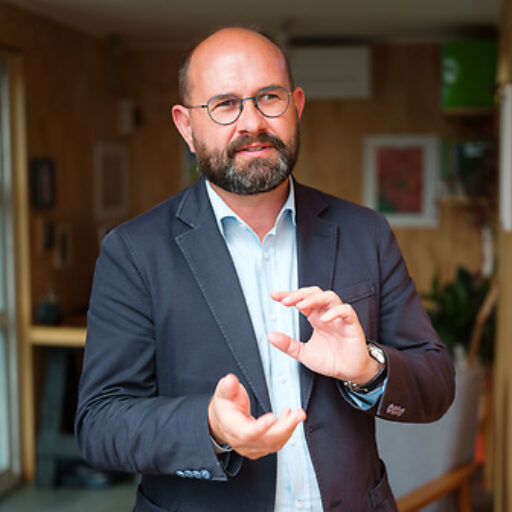
Article written February 2026 by Nick Roud, Founder of Nick Roud Coaching. Leadership Coaching Done Exceptionally Well.
2030: Leadership At A Crossroads, Not A Destination
Picture yourself walking into work on a Monday morning in 2030. That’s only four short years away!
Your “team” spans five time zones. Three are employees, four are contractors, two are AI agents embedded in your workflows. Your newest direct report is a 22‑year‑old in Lagos; your most experienced is a 61‑year‑old in Auckland who works four days a week and mentors internal founders. Your board is asking tougher questions on ethics, climate, and AI risk. Your people are asking tougher questions on purpose, flexibility, and whether you are worth following.
Leadership, in this world, is not a title. It’s a daily practice, visible in your behaviour when the pressure comes on.
By 2030, several forces will have converged:
- AI and automation reshaping roles, decisions, and required skills.
- Hybrid, fluid, and contingent work becoming the norm, not the exception.
- Demographic shifts creating truly multi‑generational, multicultural teams.
- Heightened expectations around ethics, sustainability, and social impact.
- Continuous disruption as the base‑case, not the outlier.
The leaders who thrive won’t be those who “keep control”. They will be those who can hold tension: humanity and technology, speed and reflection, performance and care. Take that last word and sit with it. Care. We have moved on from control command, employees have indicated radically to their leaders that isn’t the best way to get the very best out of them.
In my work around the globe I get to see a great deal of good leadership, today I want to take my #dysleixThinking and push our minds and thoughts into 2030.
For today’s article I invite you to Grab a cup of tea, a notebook and lets walk together as leaders and future leader.
Let’s look at what leadership will look like in 2030, the behaviours that will define effective leaders, and—crucially—how you transition from today to that future without burning out or becoming obsolete.
Take a note right now in your journal book of how your energy is? Score yourself 1-10 with 10 being giddy up here we go and 1 being no rest I need rest. As a leader you can be sure of one thing. Ensuring your energy is balanced and consistent will really support you being an effective leader (and that will not change in 2030)
What Leadership Will Look Like In 2030
Leadership in 2030 will be less about heroic individuals and more about orchestrating environments where others can do the best work of their lives. In a coaching session last week an executive and I were discussing the art of delegating, he takes in information visually so I got him to take a look at a conductor leading his/her orchestra. Dan I said imagine you are on the world stage all eyes are on you, half way through you jump down from your stand and approach the flute player, you take the flute from them and swap it with the obo player, you return to your stand and carry on.
What might the sound be like now? How might the flute player or that that point the obo player be feeling? Sure you have swapped things around but when you consider delegation your role as a leader is to ensure the right people are doing the right jobs. That you know what they should and want to be doing, that you know what spins there wheels. There is no point ever giving a flute to an obo player and ask them to perform Mozart (unless they really want to learn and do that). Delegation is about knowing your people, what they can and ‘could’ do and then ensuring you are helping them to achieve. This really helped Dan with his current team set up.
Several shifts will stand out.
1. From “knowing” to “sense‑making”
In a world where AI can answer most factual questions in seconds, your value as a leader will shift from having answers to framing the right questions and helping others interpret complexity. As an executive coach I work with smart intelligent driven and amazing leaders, part of the work we do is about transitioning them to more of a coach leader. We also focus on the 5 senses as a super-power, but will leave that for an article due out in Feb titled Elite Leaders Awareness.
Leaders will:
- Facilitate sense‑making conversations rather than issue directives.
- Work with multiple scenarios instead of a single plan. (Think about mini-strategies, what if’s, wouldn’t it be amazing if………)
- Treat uncertainty as a permanent feature, not a temporary bug.
A 2030 leader might say, “We don’t know how this regulation will land yet. Here are three plausible futures. What do they imply for our customers, our people, and our risk profile?” Leadership will move to considerations / options that will lead to outcomes.
2. From hierarchy to distributed leadership
Organisations will continue to flatten. That means top down will still be accountable but the delay into Action will be driven from all areas of the organisation. Action will be hugely measured. Decision‑making will push closer to the edge, where customers and problems live. Leadership will be more distributed across levels, functions, and even organisational boundaries. Cross borders will still in 2030 be closely observered and the Global CEOs will have to ensure top communicators are leading their regions, those VPs or Country Managers will have the freedom to act, to make decisions and to own the outcome rather than waiting for the mothership to sign something off.
Leaders will:
- Empower cross‑functional teams to make real decisions.
- Treat leadership as a shared capability, not a scarce privilege.
- Build systems where leadership can be exercised without a formal title.
Your job will be less “commanding the troops” and more “building the conditions” for leadership to appear everywhere or as I like to say here in the Global Headquarters aka 20ft shipping container paint me a picture and lets colour it in together.
3. From technology as tool to technology as teammate
By 2030, leaders will work daily alongside sophisticated AI systems that recommend strategies, model scenarios, draft content, and monitor operations.
The leadership challenge won’t be just “using tools”; it will be:
- Judging when to trust, challenge, or override algorithmic recommendations.
- Ensuring technology supports human flourishing rather than replacing it blindly.
- Communicating transparently about data, privacy, and bias.
The best leaders will act like chefs—balancing the ingredients of technology and human judgment to create something worthwhile. I am concerned greatly that we must encourage our leaders not to fall into ‘ah the data says……so we should do that…….I really want leaders to have the street smarts to sniff out ‘bull-shit’ when it arrives. We cannot afford for our street smarts to be lost to technology – those future leaders will be encourgated to use AI and so they should but the question I want every leader to ask is – what is my gut and heart telling me here? How am I feeling about this thought, decision, plan etc.
4. From “nice to have” purpose to non‑negotiable integrity
Younger generations already expect their leaders to stand for more than quarterly earnings. By 2030, ethics, sustainability, and social impact won’t be CSR add‑ons; they will be central to strategy and talent attraction. I coach a many Emerging Leaders and I can say from first hand experience they don’t want to be measured purly on the $, they want plans in place for retention, for community, for ROI etc. I get a lot of energy from the Emerging Leaders, they have something many leaders lose as the wear and tear of Board Room politics scrapes away at them, that spark of life, that spark of action and that spark of we can do this Nick Maybe that’s a question we all should ask ourselves right now
‘What’s our Spark Level’. I like that
Leaders will:
- Make hard trade‑offs visible instead of burying them.
- Integrate environmental and social considerations into core decisions.
- Accept that employees will hold them accountable publicly, not just privately.
Put simply, your people will ask, “Why are we doing this—and at what cost?” You’ll need a credible answer.
5. From “work/life balance” slogans to genuine human‑first cultures
The pandemic era taught employees that flexibility is possible. By 2030, flexibility will not be a perk; it will be a baseline expectation, integrated into how work is designed.
Leaders will:
- Design positions, people and jobs around outcomes, not presence.
- Normalise multiple life stages and working patterns.
- Pay serious attention to mental health, not just productivity.
The leaders who thrive will be those who genuinely care about the human beings behind the job titles—and show it consistently.
The Behaviours Leaders Will Need By 2030
I am going out on a limb here but as Peter Drucker said many times ‘go create the future that hasn’t been invested yet’ If leadership is behaviour under pressure, the question becomes: what behaviours will matter most?
Below are nine core behaviours that will define effective leadership in 2030. None are new. In fact if you boil them down they still have lasted the past 50 years. The difference will be the standard and the consistency required. And that as you read these is what I want you to double down on ‘consistency’. The 2030 leader will have to be more consistent than today (period).
Around 8 years ago we build our leadership assessment tools to support, and help leaders get clarity. These 9 core behaviours are littered all through the RLA360 with the aim of enabling leaders to get closer to 2030 quicker than the rest!
1. Radical self‑awareness
Future leaders must know what it is like to be on the receiving end of them.
This will show up as:
- Being able to name your triggers and blind spots.
- Inviting honest feedback and acting on it.
- Admitting when you are wrong or out of your depth.
In coaching rooms today, I see that leaders who cannot confront themselves struggle to adapt. By 2030, the half‑life of denial will be even shorter. You will be moved on!
A simple question to ask yourself: “What impact did I have in that meeting—and is that the impact I wanted?” One thing we can all do is start today a new day, move on quickly but effectively. In a room full of executives last week I said to them all ‘make a mistake once that’s ok we are all humans but make that same mistake twice then we need a cuddle’.
2. Emotional regulation, not emotional suppression
No one wants a robot as a leader. But unregulated emotion—anger, sarcasm, contempt—destroys trust at speed. Just a not on anger its ok to say you are pissed off but to cross the line is a no go!
The behaviour shift is:
- From reacting when triggered to pausing, naming, and choosing a response.
- From “I just tell it like it is” to “I’m responsible for how my message lands.”
- From venting in public to processing in safe spaces and returning with clarity.
Leaders who speak when they are furious typically shut down creativity and truth‑telling. In 2030, with hybrid and digital channels amplifying every word, that damage multiplies. Not only your words but your body language, tone etc.
3. Courageous candour
Your people will not expect you to have all the answers. They will expect you to be honest about what you know, what you don’t, and what you are doing to learn. Teams will be seen as ‘crack-teams’ with an overarching intent. They will be bought together and cross fertilisation will be required to ensure the mission is achieved. Will we see more of a contracting base rather than fixed term people, not sure but it could eventually evolve to that, one to observe and take note?
Courageous candour means:
- Saying “I don’t know yet” when that is the truth.
- Naming elephants in the room: underperformance, misalignment, ethical concerns. There are elephants everywhere and only the real leader of 2030 will be naming them. Bring them out front and centre and discuss, then take action.
- Giving clear, specific feedback in service of growth, not as a character attack.
In a noisy world, straight, respectful talk will be a competitive advantage. Gone are the six monthly or annual reviews that are written the day before because ‘I didn’t have the time Nick’ they will be in the moment on the fly!
4. Deep listening and curiosity
As problems become more complex and stakeholders more diverse, leaders will need to listen beyond their own experience.
Key behaviours include:
- Asking open, genuine questions and being willing to be changed by the answers.
- Listening across cultures, generations, and disciplines.
- Treating dissent as data, not disloyalty.
Curious leaders create safety. Safe environments generate better ideas and faster learning.
5. Coaching as a default stance
By 2030, everyone will need to keep learning just to stay relevant. Leaders who act as problem‑solving bottlenecks will hold their organisations back.
Coaching behaviour looks like:
- Helping people think for themselves instead of giving them your solution.
- Supporting others to set goals, experiment, and reflect.
- Believing that your success is measured by how many people you can help surpass you.
The best leaders will be judged not only by what they deliver, but by who they grow.
6. Adaptive decision‑making
The future will punish rigidity. Leaders will need to make decisions with incomplete information and revisit them quickly as reality shifts.
Adaptive behaviour involves:
- Deciding fast when needed, but building in review points.
- Updating your view when new data or perspectives emerge.
- Separating ego from decisions so that changing course is not a personal failure.
In practice, this might mean explicitly stating, “This is our plan for the next 90 days. Here are the assumptions that could break it. Here’s how we’ll know when to pivot.”
7. Ethical backbone
When AI, data, and geopolitical pressures collide, leaders will face more ethical dilemmas, not fewer. We must know our values, when was the last time you spent time writing down your values, what matter to you? Stop here refill your cup of tea and have a think?
Ethical leadership shows up as:
- Drawing clear red lines on behaviour you will not accept, even when profitable.
- Creating channels where people can speak up safely.
- Owning the consequences of your choices publicly.
In future boardrooms, the question won’t only be “Can we?” but “Should we?” The leaders who can hold that line will be trusted.
8. Inclusion by habit, not slogan
Diversity, equity, and inclusion will be baked into the daily reality of teams. Token gestures will not survive contact with reality.
Inclusive behaviour means:
- Actively seeking out different perspectives in decisions and debates.
- Sharing credit widely and transparently.
- Sponsoring under‑represented talent into real opportunities, not just mentoring them.
An inclusive leader will continually ask, “Who is not in this room who should be?”—and then fix that. Reverse mentoring will be a real thing in the Board Room – it wont be independent hired Board members with subject matter expertise in x it will be teenagers, young adults, a mix of internal and external staff and some some subject matter gurus that will make up the Board (I am getting a little excited that may well be by 2040)………Keep with me on this!
9. Continuous learning in public
Leaders in 2030 will be lead learners. They will model what it looks like to stay curious in mid‑career, to reskill, and to evolve.
This will look like:
- Blocking time for learning in your diary and defending it like any critical meeting.
- Sharing what you are learning with your team, not just the polished conclusions.
- Normalising experimentation and “good failures”.
Your people will decide whether it is safe to grow based on whether they see you growing.
How Leaders Will Transition From Today To 2030
The transition from today’s leadership norms to those of 2030 will not be an overnight transformation. It will be a series of deliberate choices, experiments, and honest reckonings. I have a number of C Suite Executives who I am coaching now that are shaping themselves to be ready for a CEO role in four years time, good things take time and cant be rushed – you don’t often get a second chance at a CEO Role? That is why they invest in coaching with me today!
Here is a practical pathway.
1. Start with the mirror, not the market
Many leaders respond to disruption by scanning the environment: new technologies, competitors, trends. That has value. But sustainable change starts with self‑awareness.
Concrete steps:
- Conduct our RLA360‑degree review that focuses not on competencies alone but on how it feels to be led by you.
- Work with a coach or trusted advisor to surface patterns in your behaviour under pressure.
- Identify your “non‑negotiables”: the values you will not trade off for convenience.
Ask yourself: “What parts of me are not fit for the future I say I want?”
2. Upgrade your inner operating system
Adapting to 2030 is less about adding more tools and more about upgrading your mental models: how you see the world, yourself, and others. Get used to saying NO to thing today
This upgrade may involve:
- Moving from a fixed mindset (“This is just how I am”) to a growth mindset (“I can learn new ways to lead”).
- Shifting from control (“I must approve everything”) to trust and verification (“I build the system, then let people run it”).
- Letting go of the belief that leadership means being the strongest voice in the room.
You cannot lead transformation externally if you resist it internally. We must also ensure that as a leader you spend more of your time up in the balcony rather than on the dance floor! Take a look at how you are spending your time, are you effective with it?
3. Build three core muscles: empathy, adaptability, and digital fluency
Rather than chasing every new trend, focus on three enduring muscles.
- Empathy: Practice perspective‑taking daily. Ask, “How might this land for the frontline? For our customers? For those with least power?”
- Adaptability: Take on at least one project a year that stretches you beyond your comfort zone—new market, new technology, new stakeholder group.
- Digital fluency: You don’t need to be an engineer, but you must understand the basics of data, AI, and automation enough to ask good questions and challenge decisions.
These muscles compound over time. Start now, and by 2030 they will be natural.
4. Redesign how your team works, not just what they work on
If the future of leadership is about environments, then your laboratory is your own team.
Where you can act immediately:
- Shift from time‑based to outcome‑based expectations. Be crystal clear on what success looks like and give people autonomy in how they get there.
- Establish routines that foster connection: regular check‑ins that go beyond status updates into wellbeing and learning.
- Co‑create “rules of engagement”: how you communicate, how you handle conflict, how decisions get made.
Treat your team as a prototype of 2030 leadership. Learn in that micro‑environment, then scale. If you are creating a team then really shape it towards the future, not the past.
5. Make learning a visible leadership priority
Your calendar reveals your true priorities. I get to see most of my executives calanders and they are a wash of colour, meetings here meetings there. I ask so where is your meeting with yourself? The penny drops!
If you say learning matters but you never allocate time or budget to it, your people will notice.
Practical moves:
- Allocate recurring time in your week for deep work and learning (reading, reflection, structured development).
- Invite your team into your learning journey: share articles, books, and insights, and ask what they are exploring. Start a book club today.
- Tie learning to business outcomes: show how new skills or experiments led to concrete improvements.
The goal is to make growth part of the rhythm of work, not an annual event.
6. Build a diverse personal “board of directors”
No leader can see the full picture alone. As complexity grows, so does the importance of who you surround yourself with.
Consider assembling a small, intentional circle of:
- Peers from different industries who will challenge your thinking.
- People at different life stages—including younger voices who see emerging norms earlier.
- Experts in ethics, technology, or sustainability who can broaden your lens.
Meet regularly, share live challenges, and invite hard questions. Future‑fit leaders do not journey alone.
7. Confront the behaviours that will not survive 2030
Every leader has behaviours that “worked” in the past but will not serve them in the future. The brave work is to name and retire them.
Common examples:
- Speaking when angry or stressed, and using fear as a motivator.
- Hoarding information to maintain control.
- Avoiding difficult conversations until they explode.
- Confusing busyness with impact.
Choose one behaviour you know is damaging trust or performance. Commit—publicly—to working on it over the next quarter. Invite your team to hold you accountable.
8. Anchor yourself so you don’t burn out
The transition to 2030 is not just a professional challenge; it is a personal one. Leading through constant change without burning out requires deliberate anchoring.
Protect yourself by:
- Clarifying your personal definition of success that goes beyond role and recognition.
- Establishing non‑negotiable wellbeing practices: sleep, movement, relationships, silence.
- Setting boundaries on availability, especially in hybrid and global teams.
You cannot be the calm in the storm if you are always in the eye of it.
A 2030 Leadership Blueprint You Can Start Today
To make this practical, here is a simple blueprint you can adapt immediately.
Over the next 30 days
- Ask three trusted people, “When I’m under pressure, what do you notice about me as a leader?” Listen without defending.
- Block two 90‑minute slots in your calendar for reflection and learning. Treat them as meetings with your future self.
- Identify and name one unhelpful behaviour you will work on reducing.
Over the next 90 days
- Co‑create with your team a short “team charter” that clarifies your shared purpose, ways of working, and decision‑making rules.
- Run at least one experiment that gives your team more autonomy (for example, they decide how to meet key goals, you provide support and guardrails).
- Start or join a small peer group where you can discuss real leadership dilemmas and challenge each other.
Over the next 12 months
- Undertake a structured development experience: coaching, a leadership program, or a stretch assignment that forces you to operate differently.
- Build your digital fluency: take a course, partner with a technology leader, or lead a project that integrates AI or automation meaningfully.
- Review your leadership purpose story: where you have come from, what you stand for, and who you want to be in 2030. Rewrite it if necessary.
If you repeat this cycle—reflect, experiment, learn, adjust—you will not arrive at 2030 surprised. You will arrive more grounded, more capable, and more useful to the people who rely on you.
A Call To Action: Draw Your Line In The Sand
There is a moment, in nearly every deep coaching conversation, where a leader realises that the biggest risk is not the market, the technology, or the competitor. It is their own unwillingness to change. In my confidential 1:1s we don’t let that elephant fade into the corner!
You are not powerless in the face of 2030. You are not condemned to be overtaken by events or by younger, more adaptive leaders. You have agency, today, in how you show up.
So here is the invitation.
Take one quiet hour this week—no devices, no interruptions. On a blank page, write two headings:
- “The leader I am today.”
- “The leader I choose to be in 2030.”
Under the first, be brutally honest. Under the second, be unreasonably brave.
Then, pick one behaviour, one relationship, and one decision that you will handle differently starting now to close that gap.
Not when things slow down. Not when the next project finishes. Now. Send me a copy and I can be your ‘accountability coach’.
The future of leadership isn’t a white paper or a conference topic. It is the next conversation you have with your team, the next decision you make under pressure, the next time you choose to listen instead of defend.
Draw your line in the sand. Decide who you are becoming. And start leading—not as a relic of the past, but as a leader worthy of 2030.
Coaching with me is about the now and the future, my brain is wired that way and clients are attracted to my coaching practice because of my Dyslexia and seeing things differently. My approach to coaching is partnership, long-term partnership many of my clients have been with me for 10 years, we come together each year and get to work on stuff and things. I only have a few simple rules in my business and when we meet I can share them with you. I take an evidence based approach to each and every engagement. Nothing is left off the table and results matter.
If you are serious about your leadership and want to get ahead then I’d welcome the opportunity of coaching you and together let’s make a positive dent in the world. Nick
Nick Roud is an Award Winning Executive Leadership Coach. For the past 10 years he has coached Global CEOs, Senior Executives and Emerging Leaders, he has a 100% improvement rate with his clients and has a lot of experience coaching smart, driven and talented leaders.