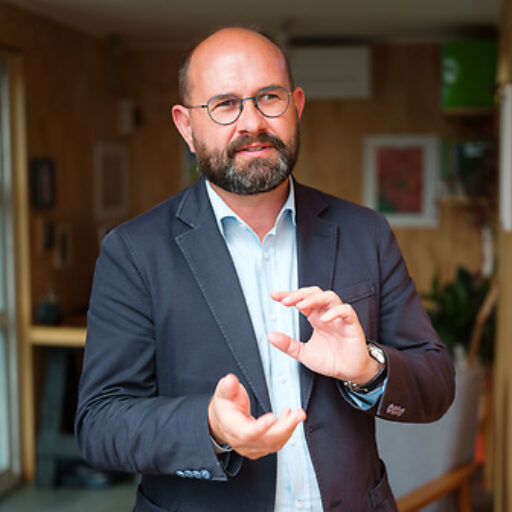
Article written by Nick Roud, 21st March 2026, Queenstown, New Zealand
If You’re Too Busy for a Leadership Coach, You Probably Need One
(A reflection on effectiveness, leadership, and making time for what matters most)
The Myth of the “Busy Leader”. If there’s one theme I hear more than any other when coaching CEOs, senior executives and predictable emerging leaders, it’s this. “I am busy, I don’t have time to do my own job”. Does that sound familiar to you as you read today’s article. I get it, really I do and can I start by saying that there is no silver bullet, no hack, no app. Your inbox is overflowing, your calendar is jam packed with meetings internally and externally for the next seven months your in one long meeting, and your days are full of decisions, fires to start (I mean put out) and the occasional glimmer of real work, meaningful work the very reason why you took on the bigger position. Time feels scarce, and coaching sounds like it could really support and enable you. Welcome into our Award Winning Executive Leadership Coaching.
I’d like to clarify that leaders who believe that they are too busy for coaching are usually the ones who most need it.
Peter Drucker once wrote and I think it flows through his book The Practice of Management “There is nothing so useless as doing efficiently that which should not be done at all” Efficiency is about doing things right; effectiveness is about doing the right things. Most leaders don’t need more time, they need more clarity about where to spend their time, why something matters, and how their decisions ripple through their companies. Coaching really helps surface that core clarity.
When Busyness Becomes the Barrier (or so called excuse) to leading well.
I had a CEO client a few years ago who I coached for 12 months, in one week alone she gifted $2500 NZ Dollars to her local charity. Whilst this is a great things to do there was an underlying theme occurring hence I fined her $20 each and every time she said she was ‘busy’. After a few months I can assure you she used that word accurately. I can say I have never met a CEO or senior executive around the world who is ‘busy’. What I see are great brains, wonderful leaders who fail to say No plus a few other things. Busyness is seductive because it feels like progress (rubbish). You’re moving fast, checking boxes, showing up to meetings. But at the very same stage, busyness stops being a badge of honor and starts becoming a tight blindfold. I had a lawyer friend in London who convinced me he worked 32hours a day! Amazing…
You might be achieving more, yet feeling less effective. Sound familiar? You might be saying ‘yes’ to things out of habit and expectations, or fear of missing out. Meanwhile the things that matter most, developing your team, building vision, making sound long term decisions all get pushed back of the queue. Typically I then see leaders feel restless. They’re working harder than ever, but results feel harder to come by. The people around you sense a strain. Energy levels dip (or are constantly at a low ebb). The sense of purpose that once guided them beings to fade into the barrage of noise coming at you.
That’s where coaching makes a quiet but profound difference.
Why Coaching Isn’t About Adding More. Subtraction is now a must!
As an award winning leadership coach I am not ever looking to add to your workload, it’s about refocusing it. Coaching isn’t about stacking new so called habits onto an already overburdened routine. It’s more about understanding what’s getting in the way of your effectiveness, stripping out and back complexity, and rediscovering focus with intent.
Many clients share that our sessions are “a conversation that helps them see what truly matters”. My work is not therapy, mentoring or management training. It’s a partnership, a professional relationship built on trust, feedback and heathy challenge. Imagine for a second if each week, for 60mins, you stepped out of the noise. You switched off your phone, No emails, No staff interruptions just space at my global headquarters aka 20ft shipping container to actually think, to reflect, to question your assumptions to explore what’s really driving your choices. That’s a gift of working with me one to one coaching.
What Effectiveness Looks Like In Action!
Peter Drucker taught that effectiveness can be learned, it’s not a trait you’re born with. The most successful leaders are really the most talented or the busiest. They’re simply those who have learned over the years how to focus on what produces the greatest results or as they say in the US ‘best bang for their buck’. Drucker’s framework for effectiveness revolves around five crucial practices so it’s appropriate to share them with you here.
- Knowing where your time goes. You can’t manage what you don’t measure.
- Focusing on outward contribution. Leadership is about results for others, not efforts for oneself
- Building on strengths. Effectiveness grows when you develop what already works
- Concentrating on a few major areas. Trying to do everything means achieving little that matters
- Making effective decisions. The quality of your decision-making shapes the quality of your leadership.
In my coaching practice I help bring these principles to life. Through ruthless structured conversations, observations, and accountability you are encouraged to apply insights in the reality of your daily leadership, as real time experiments, not abstract theories that are shared from the front of a classroom.
From Tried To Intentional
Towards the end of last year one CEO I am working with confessed during our first sessions, “I’m constantly pushing through exhaustion. I just need to get to the other side of this quarter”. Six months later, that same CE has transformed how she thought about her use of time. Instead of default meetings, she instituted intentional ‘think-blocks’ two hour sessions for strategic work that couldn’t be delegated. She learned to delegate not just tasks, but decision rights. More importantly she reconnected with why she’d taken the role of CE in the first place. Her calendar didn’t get emptier, but it became more meaningful. That is what happens when effectiveness replaces busyness; you move from reacting to leading.
The Discipline of Reflection
For nine years I have kept a journal book close to hand. In it are simple two heading on each page for each day. Three things that have put a smile on my face and One thing that has upset me. Nothing more nothing less. Each Sunday I flick thru and reflect, each month I take a deeper dive and again quarterly I reflect and review in line with the bigger question for me. Just like my daily journal leadership coaching sets aside dedicated time for reflection something most leaders don’t naturally prioritize or do. But reflection isn’t a luxury it’s structured discipline. Drucker himself was famous for his ‘feedback analysis’ practice. Each time he made a major decision, he wrote down what he expected to happen, then revisited it around 12 months later to compare results. Over time, that discipline taught him what decisions he was good at, where he consistently misjudged, and how he could improve his thought process.
Come thru to today coaching performs a similar function. Our one to one work together is
a) structured, what’s working, what isn’t and why
b) non judgmental, here to help you learn from your own experiences faster and more deeply
c) reflective, leader who embrace reflection make better decisions not because they’re suddenly wiser, but because they’ve built a personal/professional feedback loop into their own development.
Creating the Right Environment for Growth
The Global Headquarters aka 20ft shipping container is a place leaders come to work on themselves. We have been purposeful in ensuring the space works for our one to one coaching. In 2024 I was visited by a monk who I am sure floated into the HQ, a few hours into our confidential chat he reach out and said Nick this place has a special aura, a calming place to think. Well to me that was the only blessing I needed that we have created the right environment for executives to come to. Effectiveness doesn’t happen in a vacuum. It grows like the seeds we plant in our veggie garden a supportive honest, psychological safety, and trust. A strong coaching relationship is built on the same foundations.
What I have experienced over the last decade and more recently is the best coaching conversations often begin with vulnerability. The leader admits something that’s not working, or a pattern / theme they’ve been avoiding. That openness becomes the starting point for transformation. I like to call it as it is, a sign that you are safe with me, you trust that our conversations stay between you and me and know we can really get to work. Growth if you want to call it happens when two conditions are met; in our global hq this can be seen as humility to admit you don’t have all the answers, and courage to act on what you discover (not to leave it up in Auckland). I like other good coaches understand this balance. Intentionally I listen deeply, ask tough questions, and hold you accountable not to the outcome but to your own commitments. Results never come from me, I do not do the work for you, it’s the leader who is willing to step up and into a new level of truth about themselves.
So let’s be clear, my coaching approach balances compassion with healthy challenge. Together we find the midpoint between reassurance and action. Drucker insisted that encouragement must always serve performance, not comfort. Coaching with me will always be supportive but never soft.
Our clients share that sessions are ‘calm but confronting’. To me that marks we have spent out time wisely. Potential is everywhere we just need at times to reach out and take it. Let’s not hide behind excuses. Anyone can give advice (something I do only at specific junctions). What I do is to help you uncover the version of you that is you and then keep you accountable to that standard.
One big misconception about coaching is that it’s a short-term fix. I can’t speak for residentials, university programs and or workshops in my executive leadership coaching practice I work only one to one so can only speak to the results that is produced by our clients. The best coaching produces results that continue long after our six, nine and or twelve month engagement. Here’s some evidence. Every insight you gain becomes a skill you carry forward. Every perspective you expand shapes how you lead, communicate, and divide. Coaching develops skills, the ability to learn, adapt and reflect in the midst of change. It’s like investing in compound interest for your leadership capacity. A small insight today might seem minor but in three years time it can change how you lead whole teams or shape company culture!
The ROI, in that sense is not just measurable it’s exponential.
When to Begin
So, when is the right time for a leadership coach? It’s rarely when your schedule is clear, because let’s face it that’ll never happen. The right time is when you recognize that continuing as you are will cost more than pausing to invest in your own growth. You might be at a crossroads, promoted into a new role, leading larger teams, or navigating uncertainty (that inner-voice) You might feel stuck, working long hours but not seeing the impact yo once did. Or flip that you might simply sense it’s time to reset your direction, your approach. In each of these cases, coaching offers the same promise I give all our clients: a space to regain clarity, to align action with purpose and to rediscover or seek effectiveness.
As we wrap up today’s writing from a beautiful Queenstown, New Zealand can I reassure you that you don’t need to be fixed. It’s worth reiterating something many experienced coaches believe deeply; you don’t need to be fixed. Coaching isn’t remedial, it’s developmental. Our aim isn’t to patch flaws but to amplify what’s already strong and authentic in you. Which leads me to this point, every great leader is a work in progress. There is no finishing line to development, if you have crossed the finishing line you might want to look in the mirror and really question yourself. The fact remains that with the right coach, the right mindset and a genuine commitment to growth, something is not just possible, it’s inevitable. Progress may not always look dramatic or worthy of a feature length movie but over time your confidence, focus and satisfaction evolves in ays that quietly reshapes everything around you.
A common challenge among leaders is knowing what to do but struggling to execute consistently. Coaching bridges that gap.
It turns insight into action. Instead of a one-time epiphany or a few days off site, it’s a process, can be weekly or fortnightly cycles of experimentation and reflection: What did you try? What worked? What didn’t? What will you do next?
This structured rhythm transforms growth from an abstract goal into a concrete practice. Ultimately, the effectiveness you build through coaching becomes self-sustaining. You learn to coach yourself, to slow down when it counts, to question assumptions before they harden, to focus on outcomes over activity.
So lets put the elephant in the room shall we;
What Happens If You Don’t Make Time?
Let’s be honest the world won’t stop spinning AI and all the hype will keep doing what it’s doing, You may not want to work with a leadership coach and that is ok. But your growth might slow down. Your decisions might carry a little more noise, your team a little less clarity, your energy a little less renewal. Over time, these small losses accumulate until they feel normal.
The danger isn’t failure it’s drift (a new buzz word coming for down the line…….) You don’t wake up one day ineffective; you simply fade into a cycle of constant busyness with diminishing meaning.
As a leadership coach I interrupts that drift. We hold up a mirror and remind you who you are, what you stand for, and where you’re going. At its core, coaching is about effectiveness not efficiency. It’s not about squeezing more output from less time it’s about you. One to one coaching is all about you. So, if you find yourself saying, “I’m too busy for coaching,” pause for a moment. Ask instead: What’s keeping me so busy and am I busy doing the right things?
With gratitude and love from my house to yours,
Nick x